Venue-Specific Pricing Shifts: How Stadium, Court, and Track Conditions Reshape Multi-Market Selections When Layered with App-Based Credit Stacking
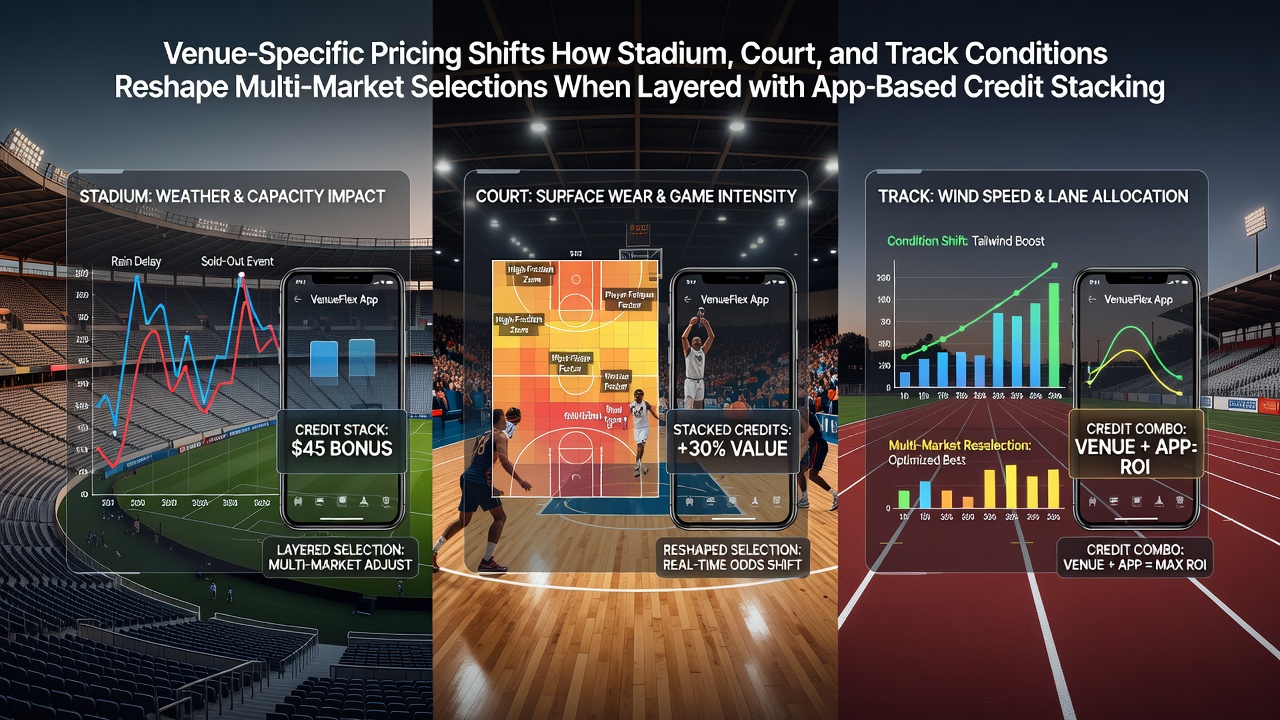
Stadium conditions, court surfaces, and track surfaces create measurable changes in betting market pricing across football, tennis, and horse racing, while app-based credit systems allow participants to layer those adjustments into coordinated selections. Data from major sporting events shows that physical variables at each venue alter probabilities for totals, handicaps, and outright outcomes in ways that interact directly with promotional credits distributed through mobile platforms. Football stadiums experience rapid shifts in pitch firmness and drainage that influence goal expectations and player performance metrics. When heavy rainfall occurs before matches, operators adjust over/under lines downward because historical records indicate fewer goals on softer surfaces. Observers note that these revisions appear within minutes of updated weather reports and persist through the fixture window.
Football Stadium Variables and Market Adjustments
Pitch wear patterns at large venues also affect corner counts and card markets. Data collected across European leagues demonstrates that older grass surfaces produce higher foul rates after the sixtieth minute, prompting bookmakers to move both-teams-to-score lines accordingly. Participants who monitor venue-specific statistics can identify these movements early and combine them with credit offers available inside betting applications. App-based credit stacking works by allowing users to apply welcome bonuses, reload credits, and cashback percentages across multiple selections without increasing total stake exposure. When stadium conditions push certain markets into favorable territory, the same credit pool can cover parallel bets on related outcomes such as Asian handicap adjustments and player prop lines.
Court Surface Effects in Tennis
Tennis courts present a different set of physical influences. Clay surfaces slow ball speed and increase rally length, which raises the expected number of games per set. Hard courts and grass produce faster points and more service breaks. Tournament organizers publish surface speed ratings before each event, and these ratings correlate with shifts in total-games markets that operators incorporate into live pricing. During the August 2026 hard-court swing in North America, several venues reported elevated temperatures that accelerated court drying and altered bounce consistency. Market data showed corresponding movements in tie-break probabilities and retirement risk lines, particularly in matches scheduled for late afternoon sessions. Those who tracked surface temperature logs alongside credit availability inside mobile apps could align selections across multiple courts simultaneously.
Track Conditions in Horse Racing
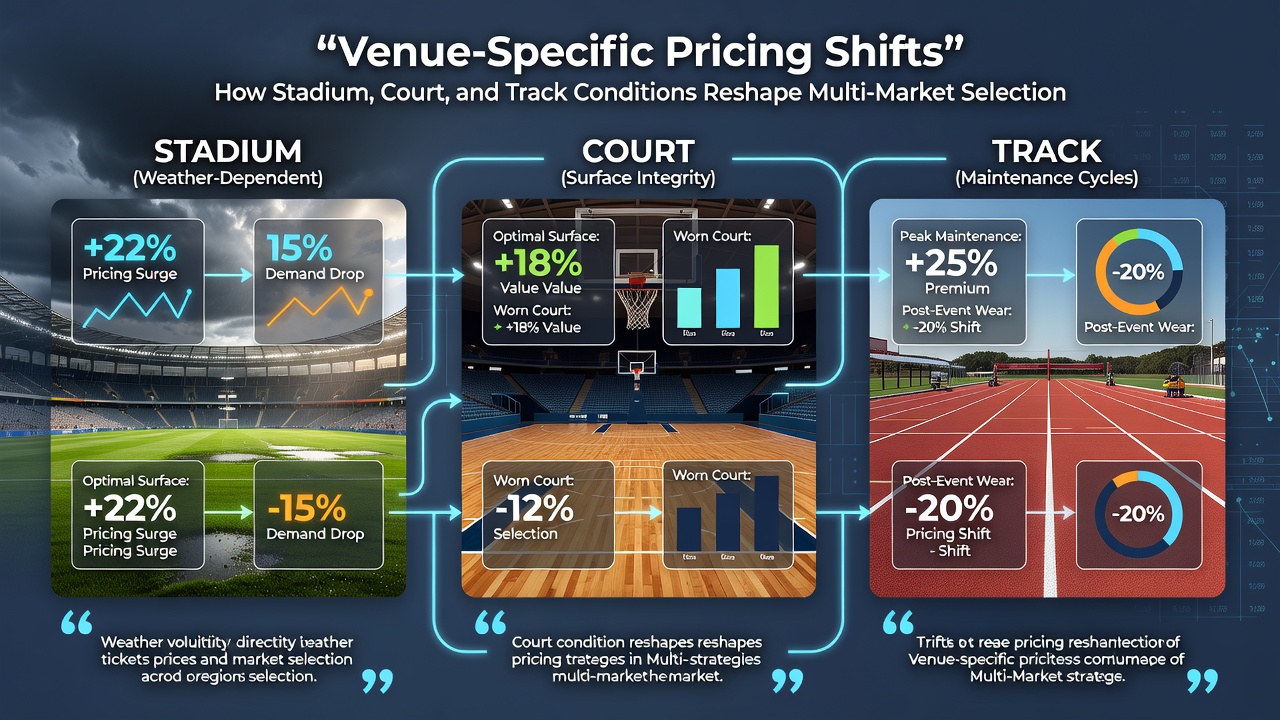
Horse racing tracks respond to moisture content and maintenance routines that change the official going description between morning inspections and race time. Official reports from bodies such as the Hong Kong Jockey Club document how changes from good to yielding ground increase finishing times and affect weight-for-age calculations. These updates trigger immediate repricing in win, place, and exotic markets that carry over into accumulator structures. When track conditions favor certain running styles, multi-market selections expand to include jockey performance statistics and pace analysis that operators publish in real time. Credit stacking through apps allows participants to apply the same promotional balance across several races at one meeting without requiring additional deposits.
Integrating Venue Data with Credit Mechanisms
The combination of venue conditions and app credits creates layered decision frameworks. A single credit allocation can support simultaneous positions in a football total adjusted for pitch moisture, a tennis set handicap influenced by surface temperature, and a horse racing place market altered by track going. Industry reports from the American Gaming Association indicate that mobile credit features now account for a growing share of multi-sport activity because they reduce the marginal cost of each additional selection. Regulatory filings in Nevada show that operators must disclose how promotional credits interact with market movements, and these disclosures include examples of venue-driven price changes. Academic studies from sports analytics programs at universities in Australia have examined the statistical relationship between environmental conditions and betting market efficiency, finding that surface and weather data improve predictive models when incorporated early. Participants often cross-reference official venue reports with live odds feeds inside the same application. This process allows adjustments to selections as conditions evolve without resetting the credit balance. Because each sport maintains distinct timing cycles, opportunities appear at different intervals throughout an August schedule that includes overlapping football pre-season fixtures, tennis hard-court tournaments, and summer racing festivals.
Conclusion
Venue-specific pricing shifts arise directly from measurable physical conditions at stadiums, courts, and tracks, and these shifts interact with app-based credit mechanisms to influence how multi-market selections are constructed. Records maintained by governing bodies and research institutions demonstrate consistent patterns across football, tennis, and horse racing that operators incorporate into pricing. When layered with promotional credits, the same environmental data supports coordinated positions across multiple markets while remaining within disclosed operational parameters.